How surreal it was to run on a beach when a couple of hours before we were stepping over giants grids on a Manhattan sidewalk. If I lived in New York I would come here all the time. Quiet, relaxing and steeped in history, it's a wonder why more people (tourists really) don't come here. Aren't you slightly curious?
Tuesday, 19 January 2010
Coney Island, Brooklyn
How surreal it was to run on a beach when a couple of hours before we were stepping over giants grids on a Manhattan sidewalk. If I lived in New York I would come here all the time. Quiet, relaxing and steeped in history, it's a wonder why more people (tourists really) don't come here. Aren't you slightly curious?
Vinegar Hill, Brooklyn
There were a lot of shop fronts, like the one below, scattered everywhere. Like in Red Hook, they seemunnused yet such important focal points of the area. I absolutely loved these shops; they were just so surreal. Were the funeral parlours? Or boutiques? i loved the symmetry of the windows,they seemed so editorial to me.
After following a long, winding cobbled path we were greeted by a giant pair of wrought iron gates. These gates were about ten feet high and what they protected came as a complete surprise. An absolutely giant mansion rested in the sun. What can only be described as a Plantation House, made from wooden slats and dark grey shutters; it was probably one of the most beautiful building I have ever seen. Who'd have thought a building like this sits hidden away in concrete covered Brooklyn? A tourist's dream. According to brownstoner.com, the house was built in the beginning of the 19th Century (1805-1806) and was given the name'The Commandants House'. If you find yourself in Brooklyn, make sure you go find this house. The hunt for it is fun (even more fun if you stumble upon it by accident) and the result is totally worth it.
As surreal an area it was, we noticed it attracted similar kinds of people to Red Hook. Perhaps slightly older and less on the art scene. Some upper-middle class men jogged passed us, Ipods plugged in, their Golden Retrievers loyally at their side. A lot of women with Buggaboo strollers, some cute kids in prep-school uniform. I'm guessing a house here would probably cost as much as an apartment in Manhattan. But when we were in a Starbucks in DUMBO and asked after the area, the guy behind the till shrugged, claiming he'd never heard of it. Either Vinegar Hill is as unimportant to New Yorker's as Croydon is to Londoner's or it's so tucked away and up-and -coming that only the trendiest of the trendies, the cultural of the cultured know about it. If that's the case then my boyfriend and I felt like some very smug tourists. If it's the former then what a shame. Such a beautiful area deserves to be a household name.
When we walked around Vinegar Hill we said to ourselves 'this is what we thought real America would be like'. If you do find yourself here, you'll know exactly what we mean. It hasn't been influenced by any mainstream businesses but it isn't primitive. The architecture could not be seen in any other country (it reminded me of San Francisco a bit as well) and walking around the tiny, quiet streets is a very unique experience. Make sure you come here!
Red Hook, Brooklyn
Once ranked one of New York's most dangerous neighbourhoods, Red Hook creeps into the East River and mourns the loss of it's once powerful industrial prowess. It was once a villiage seperate from the rest Brooklyn and in 1636 the Dutch colonists settled in the area. With its buildings built on red clay and it bieng the only area to face the Statue of Liberty face on, it's a pretty special place. As the area is right by the water, it was once a very important docking town, where food and others goods were imported and exported on the regular basis. Perhaps with the expansion of other means of transport, this industry slowly crept away.
Now sit old warehouses, drowning in rust; the high slatted walls covered in graffiti (this was the only are we saw, apart from Williamsburg, that featured a lot of graffiti. Manhattan was totally clean of it, the subways bieng on partially covered). Boats wait stoically by the dock, bobbing from side to side like forgotten cola cans thrown into the sea. Houses that were once nestled between other houses stand alone, their neighbours bieng victims to demolition and neglect. There are hardly any people around and it felt as though Manhattan was a myth, distant in memory and feeling. Perhaps this is because it's pretty hard to get here. There are hardly any subway stops and few buses. It is possible to get the ferry but again, finding out where that docks was pretty much impossible.
We got on the F train and exited in a very fancy area of large houses and Christmas light displays. One man told us to come and see him turn his on (actually he yeld it to us when we were on the other side of the street. 'Come see my light diplay later on folks!' Ah, Americans.) and bratty kids with stuck up parents admired them as their mummies dragged them away. It was a smaller Manhattan, wealthy and unubashed about it and and I thought 'Is this it?' Then you cross and motorway over a bridge and carry on walking. You pass car parks, big billboards and industrial estates and you just have to follow your instincts till you reach the rusty browns and greys of this tiny, isolated place. When we got there we made sure we left before dark as it would have been a nigtmare trying to find our way back.
Red Hook is now known as a 'Residustrial' area. Artists, musicians and the odd business man are beginning to flock here. They should do it quickly before the prices saw like they always do in The City That Never Sleeps. There is an absoultely giant food 'mart' which caters to the clientel the area is beginning to attract. They stock organic everything, European anything. Who would have thought you could find Mars Bars, Kit Kats, CocoPops, HobNobs and Mr Kipling in the middle of desolate Brooklyn. That was when we realised Red Hook isn't as shabby as it seems. Shabby chic. How horribly standard. Unlike Williamsburg, however, the area still holds so much charm, such authenticity. We had been in Manhattan for about two and a half weeks and it was only when we got into areas of Brooklyn that we felt we were in America. Real America, not Sex and The City America.
The area had the simplicity of Vinegar Hill but, like Vinegar Hill also, it felt rich in culture. It's culture untouched by savvy New York PR gurus, untouched by tourists with cameras, untouched by Burger Kings and Duane Reades. It seemed as though it were completely content in just being itself and I imagine it looked exactly how it looked in the turn of the 20'th century. I completely loved this area. I loved its surrealness. The feeling of a ghost town slowly waking up. I can;t wait to go back in a couple fo years and see how it's changed. I just pray it doesn't become another Shoreditch wannabe. I hope it stays true to itself always and forever.
Last Chance Exhibitions
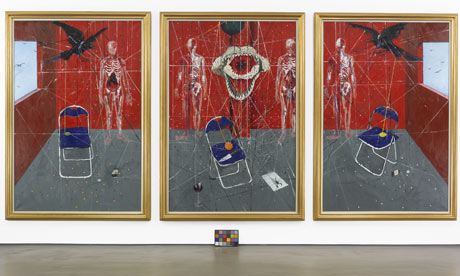
White Cube Gallery
ENDS: 30TH JAN, 2010
------------------------------------------------------------------------------------------------------
Fantasies, Follies and Disasters: The Prints of Francisco De Goya
Manchester Art Gallery
ENDS: 31ST JAN, 2010
---------------------------------------------------------------------------------------------------
Beatles to Bowie: The 60's Exposed
National Portrait Gallery
ENDS: 24TH JAN, 2010
http://www.npg.org.uk:8080/beatles/exhib.htm-------------------------------------------------------------------------------------------------------
Future Fashion Now: New Design from the Royal College of Art
V&A Museum
ENDS: 31ST JAN, 2010
-----------------------------------------------------------------------------------------------------
Turner and The Masters
Tate Britian
ENDS: 31ST JAN, 2010
http://www.tate.org.uk/britain/exhibitions/turnerandthemasters/default.shtm---------------------------------------------------------------------------------------------------
Earth: Art of a Changing World
GSK Contemporary Season 2009, The Royal Academy of Arts
ENDS: 21ST JAN, 2010
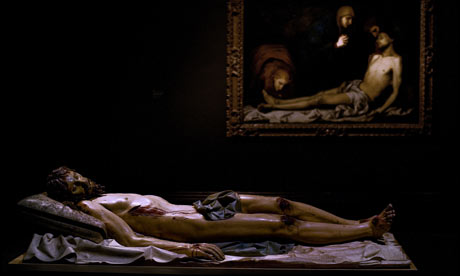
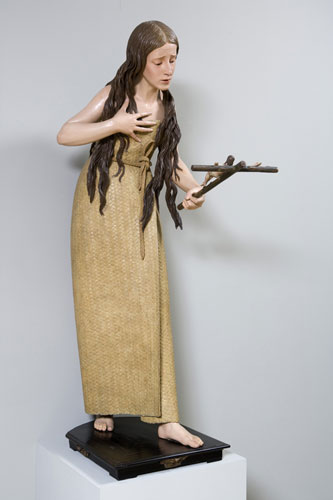
Must See!! Last Chance Exhibition: The Sacred Made Real
From everything I've heard (and everything I've seen) this exhibition is a complete must see. Even if you're not a fan of religious art, or even art, it's been the buzz exhibition of past few months. And I've yet to go, damn it. Looking back on religious art from the Spanish Golden Age (1600-1700), amazing polychrome wood sculptures are placed side by side with paintings from masters like Velazquez and more. Apparently, the sculptures are so true to life stadning next to them is an eery and surreal experience.